
Veterans come to treatment carrying a different set of experiences than most civilians. Chronic pain from service-related injuries. Trauma that does not get left behind when the uniform comes off. The pressure of readjusting to a life that no longer looks the way it once did. Substance use often becomes the way people manage all of that — not because they are weak, but because they are dealing with things that are genuinely hard. Veterans addiction programs in Baton Rouge at Red River Treatment Center are built to meet that reality. Our team understands what you have been through, and we take care of the whole person — not just the addiction.
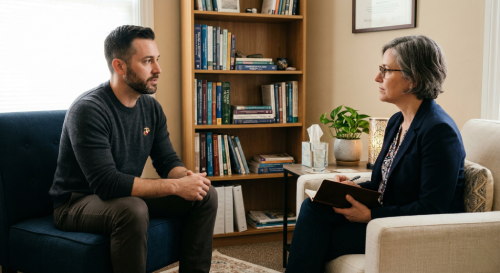
It is not random that veterans struggle with substance use at higher rates than the general population. There are specific, identifiable reasons — and understanding them matters if you are trying to get real help.
The factors that drive higher rates of addiction among veterans include:
At Red River Treatment Center, veterans addiction programs in Baton Rouge address all of these factors — not just the substance use on the surface.
Civilian treatment programs are not designed with veterans in mind. That is not a criticism — it is just a fact. And it matters more than people realize.
When you are in a group therapy session, and the conversation does not account for combat trauma, military culture, or the specific experience of having served, it is hard to connect. It is hard to feel like the people in the room actually understand your situation. And when you do not feel understood, it is a lot easier to disengage.
According to the VA Health Systems Research on substance use disorders, 2.8 million veterans — 14 percent of all U.S. veterans — reported having at least one substance use disorder in the previous year. (1) That is a population with specific needs, and those needs deserve a specific response.
At Red River, our clinical team in Baton Rouge takes the time to understand what your service looked like, what came home with you, and how that connects to where you are now. That context shapes everything about how your care is delivered.
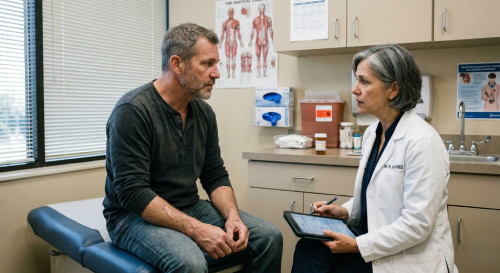
When you arrive at our Baton Rouge facility, you go through the same intake process as every other patient — medical history review, substance use assessment, and physical evaluation. But the care plan that comes out of that process is built around your experience as a veteran.
Here is what treatment at Red River includes for veteran patients:
Our team in Baton Rouge meets veterans where they are. No judgment. No lecture. Just honest, clinical care from people who understand the territory.
This is worth saying directly: for a lot of veterans, the substance use and the trauma are not separate problems. They are the same problem showing up in two different ways.
PTSD creates a state of hypervigilance, emotional numbness, and persistent distress that is genuinely exhausting to live with. Substance use offers temporary relief from that state. The brain learns to associate the substance with relief — and that association is powerful. Breaking it requires addressing what the substance was doing, not just removing the substance itself.
At Red River Treatment Center in Baton Rouge, our clinical team treats the trauma alongside the addiction. That integrated approach is what makes recovery stick for veterans who have been through treatment before and found that it did not address the full picture. You can learn more about how Red River Treatment Center’s addiction programs for veterans are structured across all levels of care.
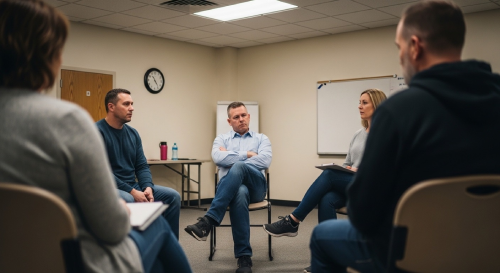
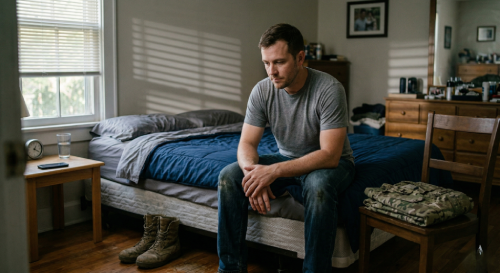
Asking for help is hard. For veterans, it can be especially hard — there is a long history of being told that strength means handling things on your own. We want to say something different: recognizing that what you are dealing with is bigger than willpower is not weakness. It is clarity. And it is the thing that makes recovery possible.
If you are a veteran in Baton Rouge who is ready to take that step — or even just ready to have a conversation — call us. Our admissions team at Red River Treatment Center will talk through your situation honestly and without pressure.
Reach us at (225) 443-4628. We are at 2414 Bunker Hill Dr, Baton Rouge, LA 70808.
No. You can contact Red River Treatment Center directly. Our admissions team will walk you through the process and help you understand your options without needing a referral to start the conversation.
Yes. Co-occurring conditions, including PTSD, are addressed through our integrated dual diagnosis approach. The two are treated together as part of one unified care plan.
The clinical framework is the same. What is different is the context — our team takes your service history seriously and builds your care plan with that experience in mind. Military culture, trauma, chronic pain, and reintegration challenges are all part of the conversation.
Prior treatment history is part of your intake assessment. Our team will look honestly at what has and has not worked before and build a plan that accounts for that. Not every program is the right fit — and there is no shame in the fact that something did not work the first time.
The full continuum — medically supervised detox, residential treatment, PHP, and IOP. Your care team determines the right starting point based on your assessment. You can also explore all programs at our Baton Rouge addiction treatment center to get a sense of all your options before you call.