
Some people can work on recovery while staying at home. Others have tried that — maybe more than once — and it just does not hold. The environment keeps pulling them back. The people, the routines, the stress. If that sounds familiar, it is not a willpower problem. It is a signal that you need a different level of support. Inpatient addiction treatment in Baton Rouge at Red River Treatment Center means you come here, you live here, and for the duration of your program, getting better is the only thing on your plate. For a lot of people, that change of environment is the thing that finally makes recovery possible.
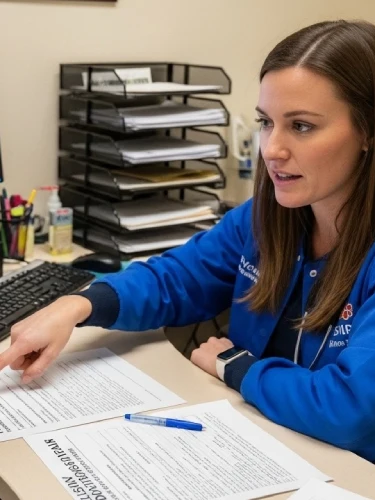
You live at the facility. That is the core of it. Full-time, on-site, with a clinical team around you every day.
What fills your days is a mix of individual therapy — one-on-one sessions with a counselor who knows your history and your goals — and group work with other patients going through the same process. There are skills groups focused on understanding triggers, managing cravings, and building the habits that make sobriety sustainable long after you leave. Medical staff monitor your health throughout. And before you ever walk out the door, your team has already mapped out what the next phase of your recovery looks like.
It is focused work. Purposeful. A lot of patients say it is the first time they ever had real space — no distractions, no obligations pulling them in ten directions — to actually deal with what is underneath the addiction.
The simplest way to put it: inpatient means you live here, outpatient means you live at home.
Beyond that, the differences are real. Inpatient gives you round-the-clock clinical support and removes you completely from whatever environment has been making it hard to stay sober. Outpatient — whether that is IOP or PHP — gives you structured sessions while you continue living your regular life. Both are legitimate levels of care. They just serve different situations.
Inpatient tends to be the right call when your home environment is part of the problem. When outpatient has not worked before. When the severity of what you are dealing with is high enough that you need more than a few sessions a week to stay steady. If you are not sure which fits your situation, that is exactly the kind of thing our admissions team is good at sorting out.
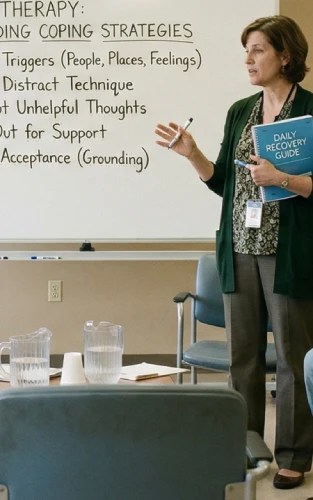
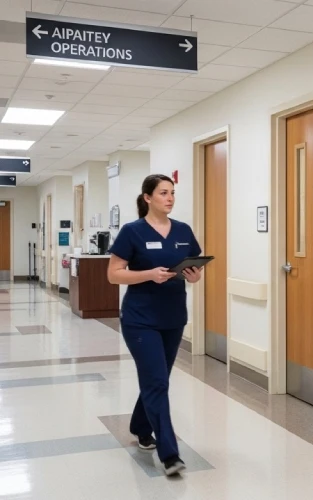
People want to know what they are actually walking into. That is a completely fair thing to want to know.
Days at our Baton Rouge facility on Bunker Hill Drive have structure to them, but they are not rigid or institutional. You wake up, eat, and move through the day’s programming — therapy sessions, group work, some personal time. Evenings wind down. The setting helps with that. We are in a quiet, professional part of Baton Rouge, tucked away from the chaos that tends to follow active addiction around. The Woman’s Hospital campus is close by. The neighborhoods of Woodgate and Wimbledon are right there. It is calm in a way that a lot of patients say they did not realize they needed until they got here.
According to NIDA’s research-based guide on drug addiction treatment, residential treatment lasting less than 90 days tends to produce limited results. (1) That is worth knowing going in — not to scare you, but because setting honest expectations is part of how we do things here. Recovery takes real time.
No honest answer to this question starts with a number. It starts with your situation.
How long you have been using, what you have been using, how your body and mind respond to treatment — all of that shapes the timeline. Some patients move through faster. Others need more time, and that is okay. What we do not do is rush the process to hit some predetermined discharge date. Your stay is built around your progress, not a calendar.
What we can tell you is that you will not leave without a plan. Before inpatient wraps up, your care team sits down with you and maps out exactly what comes next. You will know where you are going, why, and what to expect when you get there.
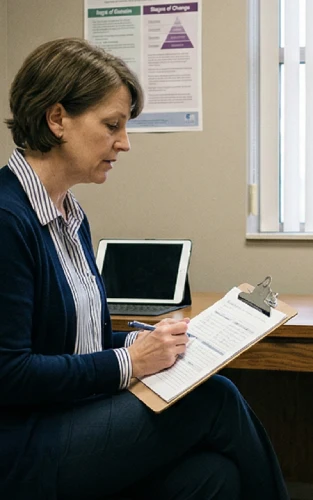
Finishing inpatient is a real accomplishment. It is also just the beginning.
Most patients move from inpatient into a step-down level of care — usually our partial hospitalization program or intensive outpatient program — where the clinical work continues at a less intensive pace while you start re-engaging with regular life. That continuum matters. Recovery does not end at discharge, and the plan you leave with carries as much weight as the work you did while you were here. You can get a full sense of what that path looks like at Red River Treatment Center’s full continuum of care.
When you are ready to talk, we are here. Call us at (225) 443-4628. We are at 2414 Bunker Hill Dr, Baton Rouge, LA 70808.
Same thing, different words. Both mean you live at the facility and receive full-time care. At Red River Treatment Center in Baton Rouge, our inpatient program is residential.
No — and that is intentional. Inpatient asks for your full presence. If maintaining work or school right now is a priority, our IOP program is the better fit for that situation.
Comfortable clothes, personal hygiene items, and whatever helps you feel at ease. Our admissions team will send you a specific list before you arrive so there are no surprises at the door.
That depends on where you are in your treatment and what makes sense for your situation. Our staff will walk you through the family contact piece during the admissions process.
Your care team builds your discharge plan with you — not after you leave, but before. Most patients step into PHP or IOP next. If you want to look at those options now, you can explore addiction treatment options at our Baton Rouge center.