
Quitting alcohol sounds straightforward until your body makes clear that it isn’t. After years of heavy drinking, the body doesn’t just let go, it fights back. Withdrawal can get dangerous quickly, and for a lot of people, that’s the part nobody warned them about. Medical detox for alcohol is how that process gets handled safely, with licensed staff present and the right clinical support in place from the start. At Red River Treatment Center in Baton Rouge, we accept most major insurance plans and someone is always available to take your call. As a licensed addiction treatment center, we provide supervised alcohol detox in a private, structured setting. Learn more about our alcoholism treatment program.

Medical detox for alcohol is a physician-supervised process that safely removes alcohol from the body while managing dangerous withdrawal symptoms. At Red River Treatment Center in Baton Rouge, patients receive around-the-clock clinical monitoring, medication management, and direct care from licensed staff throughout detox.
Detox gets thrown around as a general term. What it actually looks like in a clinical setting is more specific than most people expect and a lot more active.
There’s no passive waiting involved. A care team is assessing you, adjusting medications, checking vitals, and monitoring for changes throughout the day and night. If something shifts, someone is there to respond. That’s the difference between supervised detox and trying to manage it on your own.
At Red River, intake assessment comes first. What medications make sense, how closely you need monitoring, what the next few days realistically look like, none of that gets decided in advance. It gets decided based on you. The facility at 2414 Bunker Hill Dr is built for exactly this kind of care: private, staffed, and not a general hospital ward. (1)

People try to quit on their own all the time. Some make it through without serious trouble. Others don’t and the ones who don’t often had no idea the risk was there until it was already happening.
That’s the part that catches people off guard. Withdrawal doesn’t follow a predictable script. Someone who quit before without incident can have a seizure the next time. There’s no way to know in advance, and there’s no way to intervene without someone physically present to do it.
In Baton Rouge, trying to manage withdrawal at home means emergency help is minutes away if you’re able to call. At Red River, clinical support is already in the room. That’s not a small distinction.
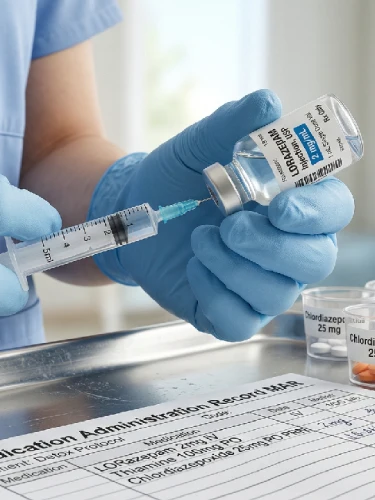
Access to medication is one of the things that separates medical detox from going it cold. These aren’t new treatments or experimental approaches. They’re established tools, ones clinical teams have used for a long time because they work.
During detox, medications support the nervous system as it adjusts to the absence of alcohol, helping ease physical discomfort and reduce the severity of what you’re going through. Hydration support is part of it too as withdrawal affects the body’s fluid balance in ways that need to be managed.
None of this is one-size-fits-all. At Red River, what’s appropriate for you is based on your history, your level of dependence, and how you’re responding, not a standard protocol applied the same way to everyone.
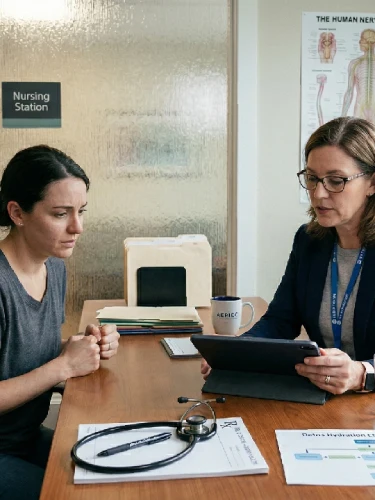

Not knowing what’s ahead is one of the things that keeps people from picking up the phone. A general sense of the timeline helps, even knowing that the details look different for everyone.
Withdrawal typically begins within hours of the last drink. Early symptoms tend to include restlessness, nausea, sweating, and an elevated heart rate. That early window is when monitoring matters most because symptoms don’t always stay manageable on their own.
For patients in Sherwood Forest and Shenandoah working around jobs or family, the time question is usually the first one. Your clinical team at Red River gives you a realistic picture of your individual timeline after intake, not before, because it genuinely depends on your situation.
Completing detox is worth something. It’s also only the beginning and leaving without a clear next step is one of the most reliable ways that progress falls apart.
The conversation about what comes after starts before detox ends. That’s built into how we run the program. By the time you’re ready to step down, there’s already a plan in place: residential treatment, Partial Hospitalization (PHP), or Intensive Outpatient (IOP), depending on what makes sense for where you are.
All of it happens at the same facility. No new intake, no unfamiliar team, no gap to fall through between detox and whatever comes next. For a lot of people, that continuity turns out to be one of the most important parts of the whole process.
Yes. Red River accepts United Healthcare, Aetna, Healthy Blue, LA Healthcare Connection, and Caritas. Call (225) 443-4628 to check your specific coverage before you come in.
Depends on the person. Severity of dependence, overall health, how your body responds. Your clinical team gives you a realistic estimate after intake, not before.
It’s a severe form of alcohol withdrawal with confusion, hallucinations, seizures. It can be fatal. It’s also one of the main reasons that going through withdrawal without medical supervision is a genuine gamble.
Often, yes. Call (225) 443-4628 to find out what’s available right now.
It’s strongly recommended that detox leads somewhere rather than just ending. The clinical team works with you on that decision before you leave so you’re not figuring it out on your own at the door.
Joint Commission accreditation, medical staff available around the clock, and a direct connection to residential and outpatient treatment all at the same Baton Rouge location.