
For a lot of people, the words “12-step program” bring up more questions than answers. What does it actually involve? Do you have to be religious? Is it the same thing as AA? At Red River Treatment Center in Baton Rouge, 12-step program facilitation is a structured, counselor-guided process, not something you’re handed a pamphlet about and left to figure out on your own. It’s a core part of how we approach addiction treatment, and it’s integrated into our programs from the start. As a licensed addiction treatment center, we guide patients through each step with trained counselors and a peer community built for lasting recovery. Learn more about our alcoholism treatment program.
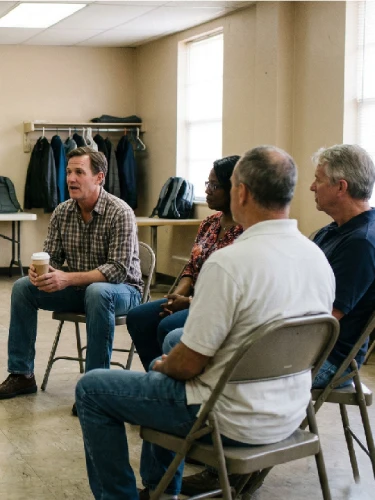
12-step program facilitation is a structured, counselor-guided approach that introduces patients to the principles of Alcoholics Anonymous and similar peer support programs during addiction treatment. At Red River Treatment Center in Baton Rouge, trained staff help patients work the steps within the safety of a clinical setting.
There’s a difference between knowing the 12 steps exist and actually working through them with guidance. Facilitation is the guided version where a counselor walks you through the process inside a clinical setting, at a pace that makes sense for where you are.
For patients in Baton Rouge who have never engaged with AA or aren’t sure it applies to them, that structure removes a lot of the uncertainty. You’re not walking into a meeting cold. You’re building familiarity with the model before you ever leave the facility.
Louisiana’s strong sense of community and faith runs deep for a lot of people here. For many patients, the values embedded in the 12-step framework of accountability, humility, connection aren’t foreign at all. They’re familiar in a different context. (1)

One of the most common objections to 12-step programs is that they feel religious rather than clinical. It’s worth separating those two things.
The steps are spiritual in nature because they deal with honesty, accountability, making amends, and building a life that doesn’t require alcohol to function. None of that is specific to any religion. What the steps actually target are the patterns that keep addiction in place: shame, broken relationships, avoidance, and self-deception.
At Red River Treatment Center, 12-step facilitation runs alongside clinical therapy, not instead of it. The two approaches reinforce each other. CBT addresses thought patterns; the steps address behavior and character. Together, they cover more ground than either one does alone.
One thing a clinical team can offer you is expertise. One thing they can’t offer is lived experience or the specific knowledge of what it’s like to have been where you are and come out the other side.
That’s what a sponsor brings. A sponsor is someone further along in recovery who provides accountability, guidance, and a direct line of support when things get hard. The relationship is voluntary and personal, and for many people it becomes one of the most important parts of their ongoing recovery.
Peer community works the same way at a broader level. Being around people who understand addiction from the inside, not just clinically, reduces isolation and builds the kind of social network that supports long-term sobriety. For patients who feel alone in Baton Rouge, that community is one of the most practical things 12-step facilitation provides.
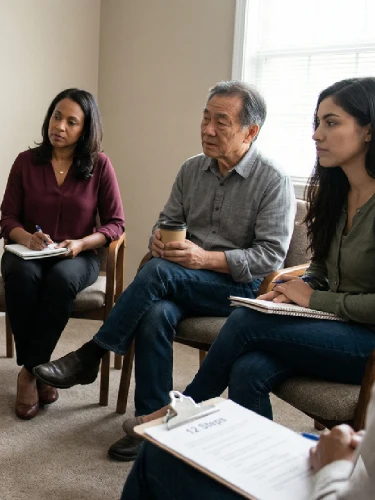
At 2414 Bunker Hill Dr, our counselors work with both 12-step facilitation and evidence-based clinical models. That combined approach is intentional. Not every patient connects with the 12-step framework immediately and that’s something our team is prepared for.
Facilitation at Red River means patients leave with step work already underway, not just an explanation of what the steps are. By the time you finish treatment, you’ve had guided practice with the model in a supported setting. The transition to community meetings after discharge is a continuation, not a cold start.
Families comparing treatment options in Baton Rouge will find that integrated facilitation, where the steps are worked inside treatment rather than simply recommended, produces a more connected, prepared patient at discharge.
Discharge is the point where peer support becomes most important and most fragile. The gap between leaving a treatment facility and finding a consistent meeting is where a lot of people lose momentum.
At Red River Treatment Center, helping patients connect to Baton Rouge-area AA meetings is part of the discharge process. That includes identifying meetings in Mid City and surrounding areas that fit your schedule and comfort level. You leave knowing where you’re going, not just knowing that meetings exist.
That first meeting after discharge doesn’t have to feel like starting from scratch. If you’ve worked through facilitation inside treatment, you already know what to expect.
Not exactly. Facilitation is a clinical approach that introduces and guides patients through AA principles inside a treatment setting. AA itself is a community-based program you continue after discharge.
No. The steps are spiritual rather than religious — they focus on honesty, accountability, and personal growth. Many people in recovery who don’t consider themselves religious find them useful.
12-step facilitation is integrated into treatment. Counselors guide patients through the process at a pace that matches their comfort level — no one is pushed through it faster than makes sense for them.
Baton Rouge has multiple AA and NA meetings running daily. Red River staff help patients find the right local group before discharge so the connection is already in place.
No. Peer support works best alongside clinical treatment, not as a substitute for it. The two serve different purposes and are stronger together.
Red River Treatment Center offers alternative peer and evidence-based support options. Call (225) 443-4628 to talk through what might be a better fit for you.